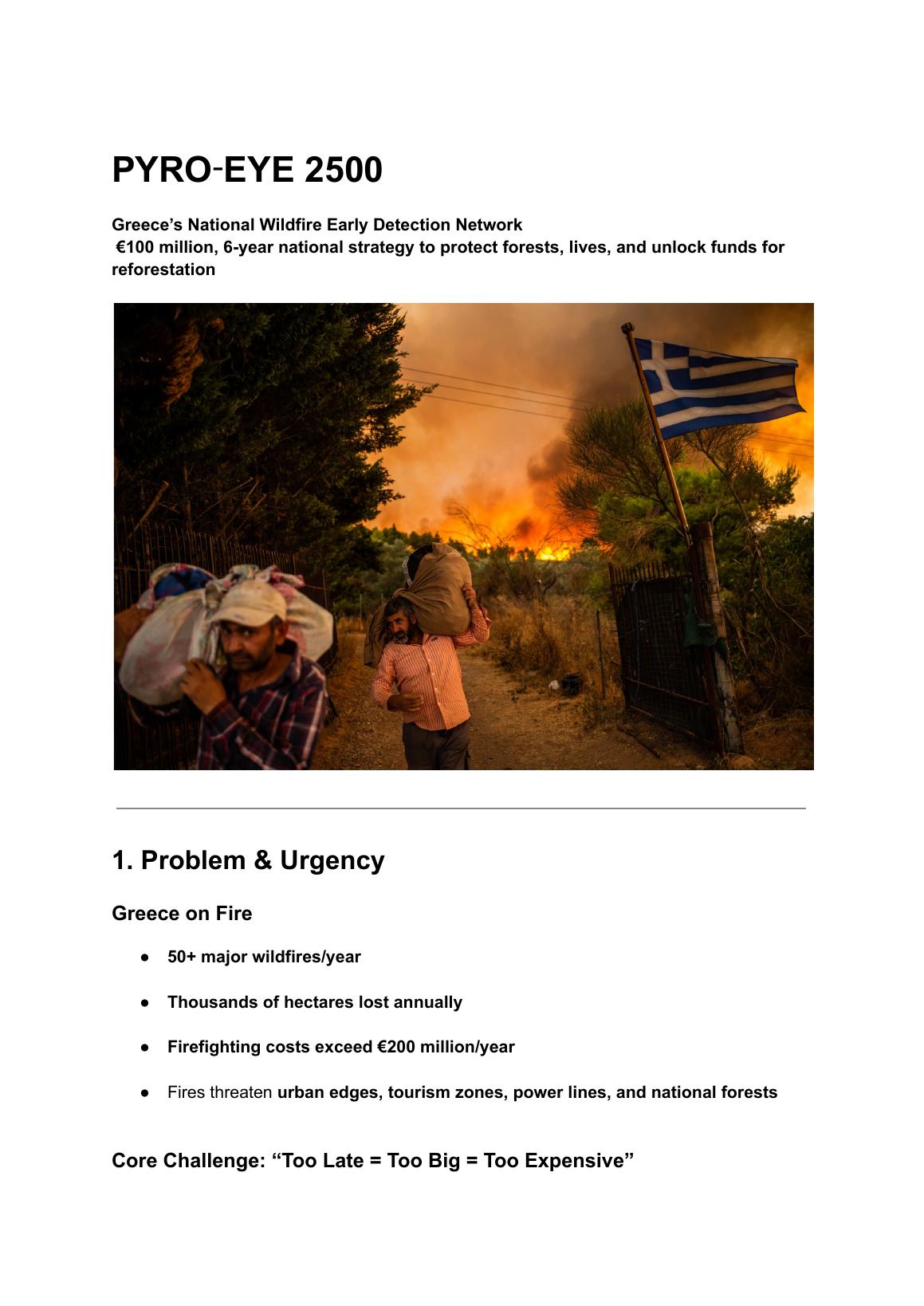
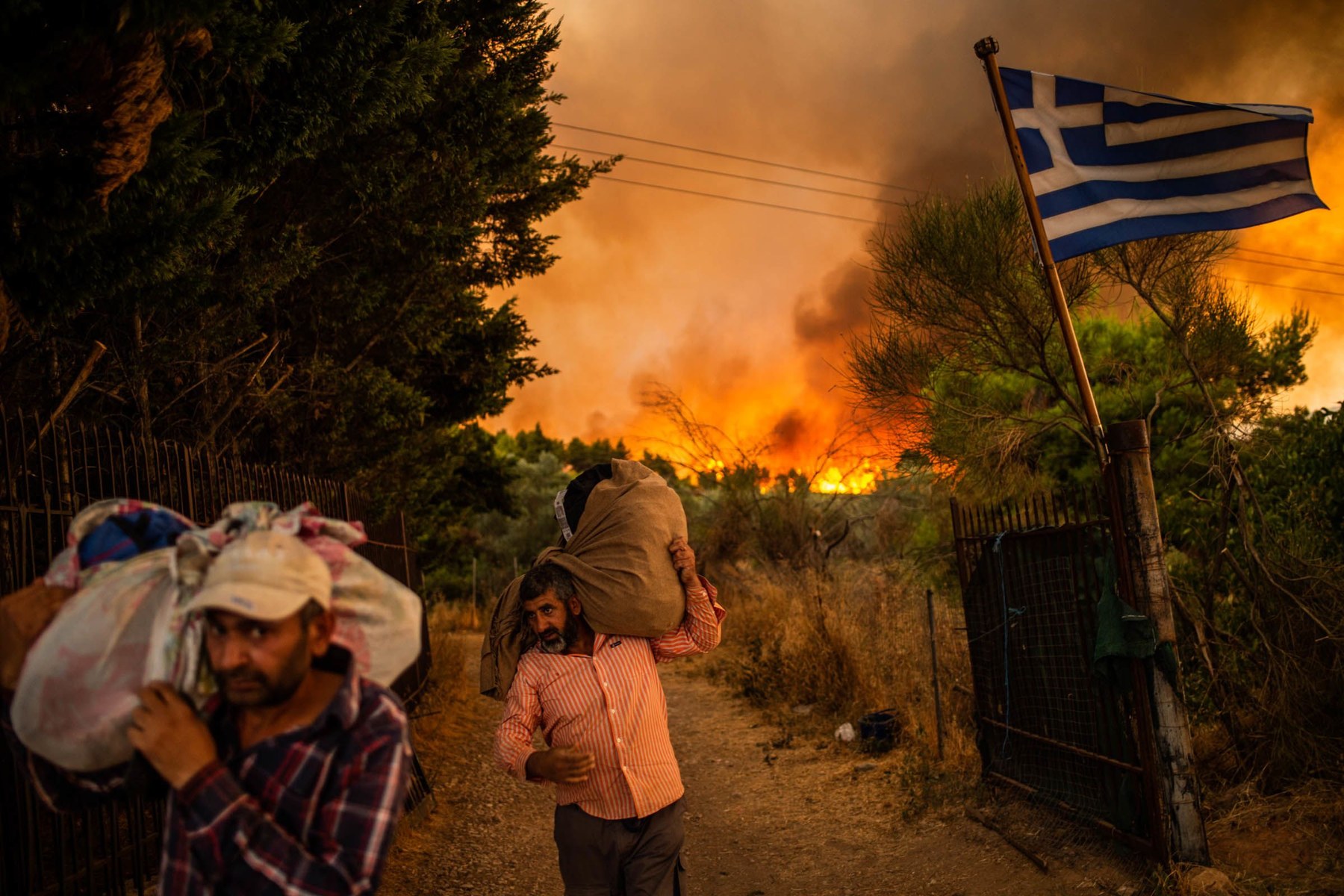
PYRO‑EYE 2500 is a national wildfire resilience proposal built around one central idea: the earlier a fire is confirmed, the greater the chance of containing it before it becomes a major emergency. The concept responds to the recurring impact of wildfires on forests, communities, tourism areas, infrastructure and firefighting resources across Greece.
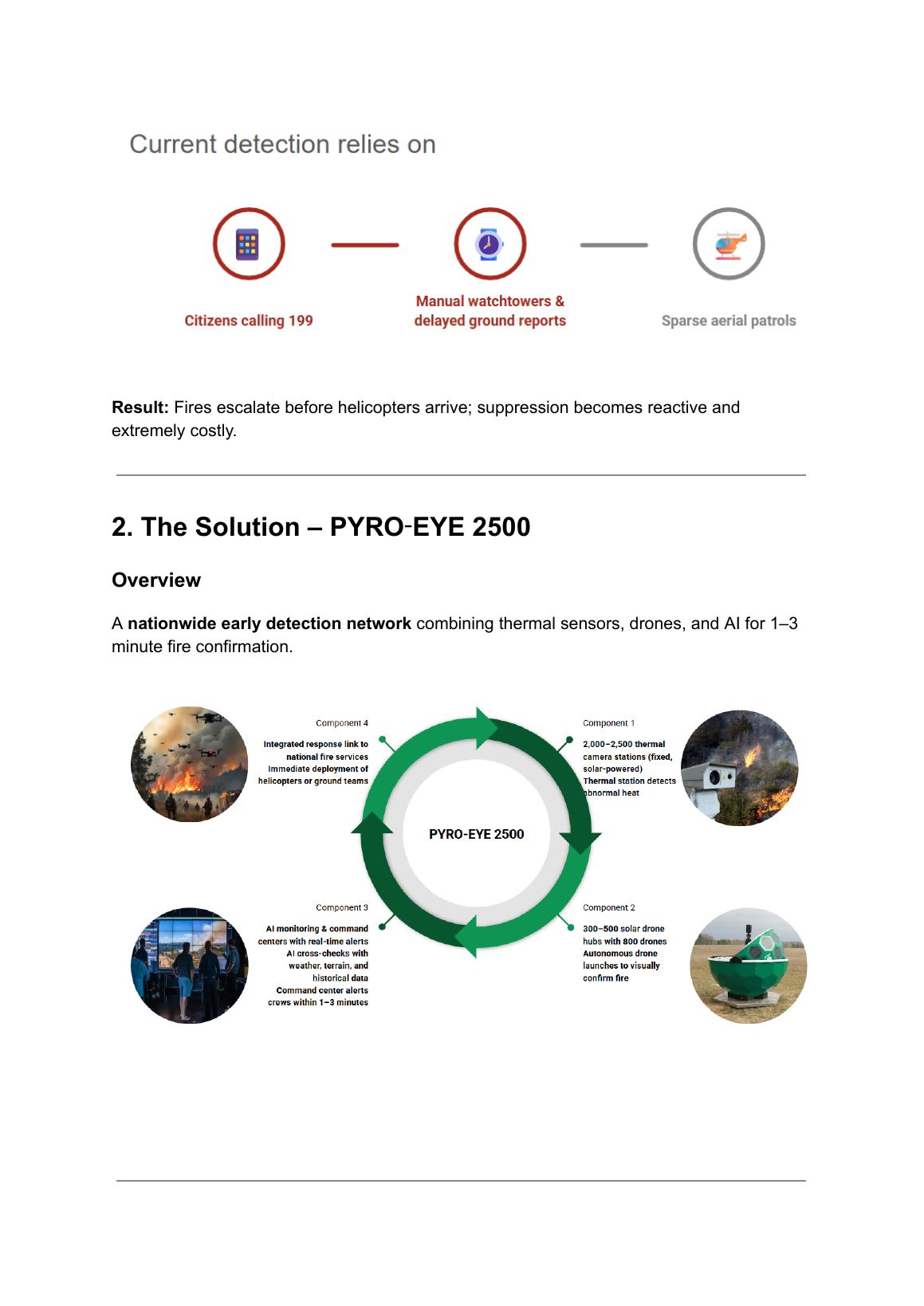
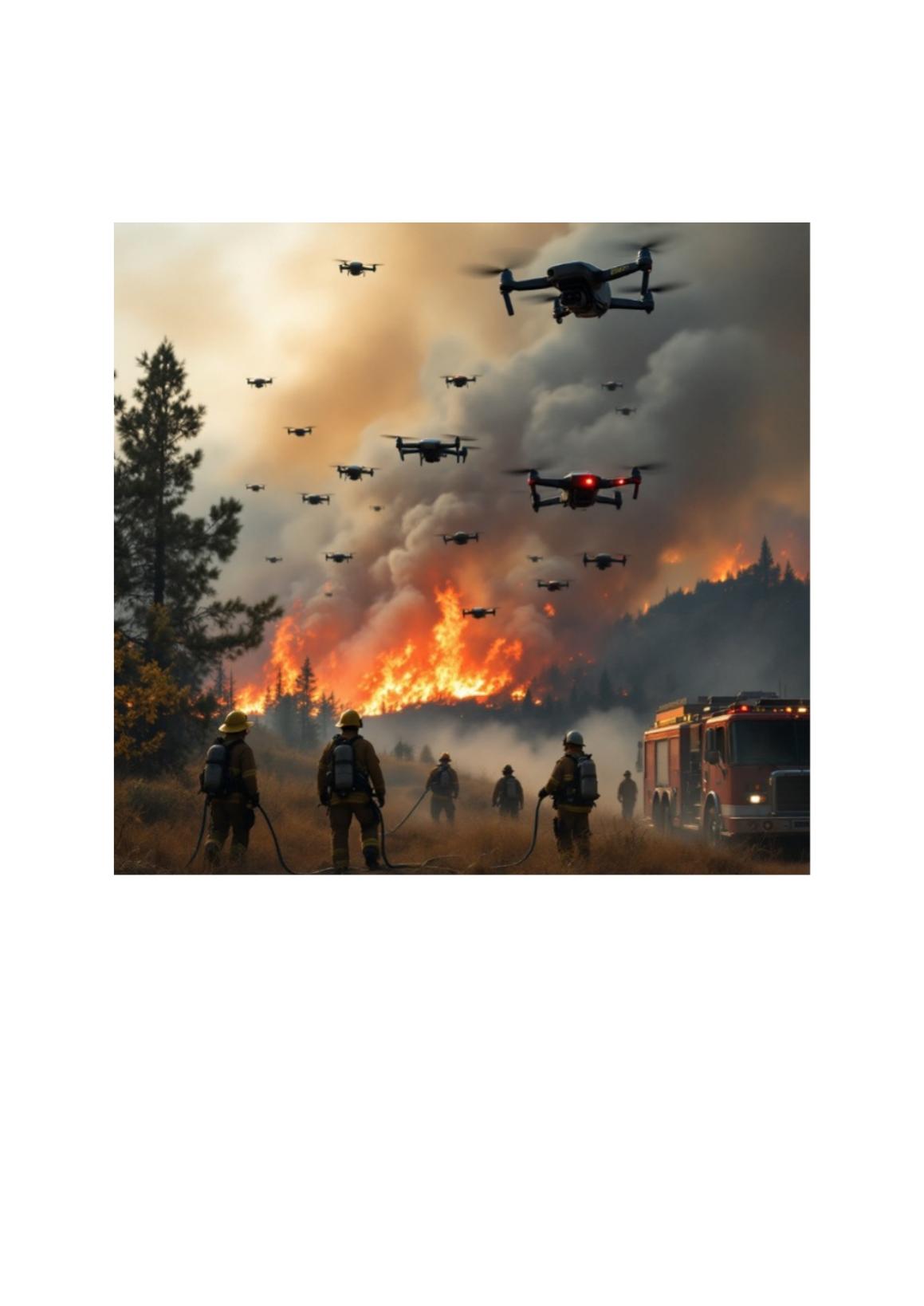
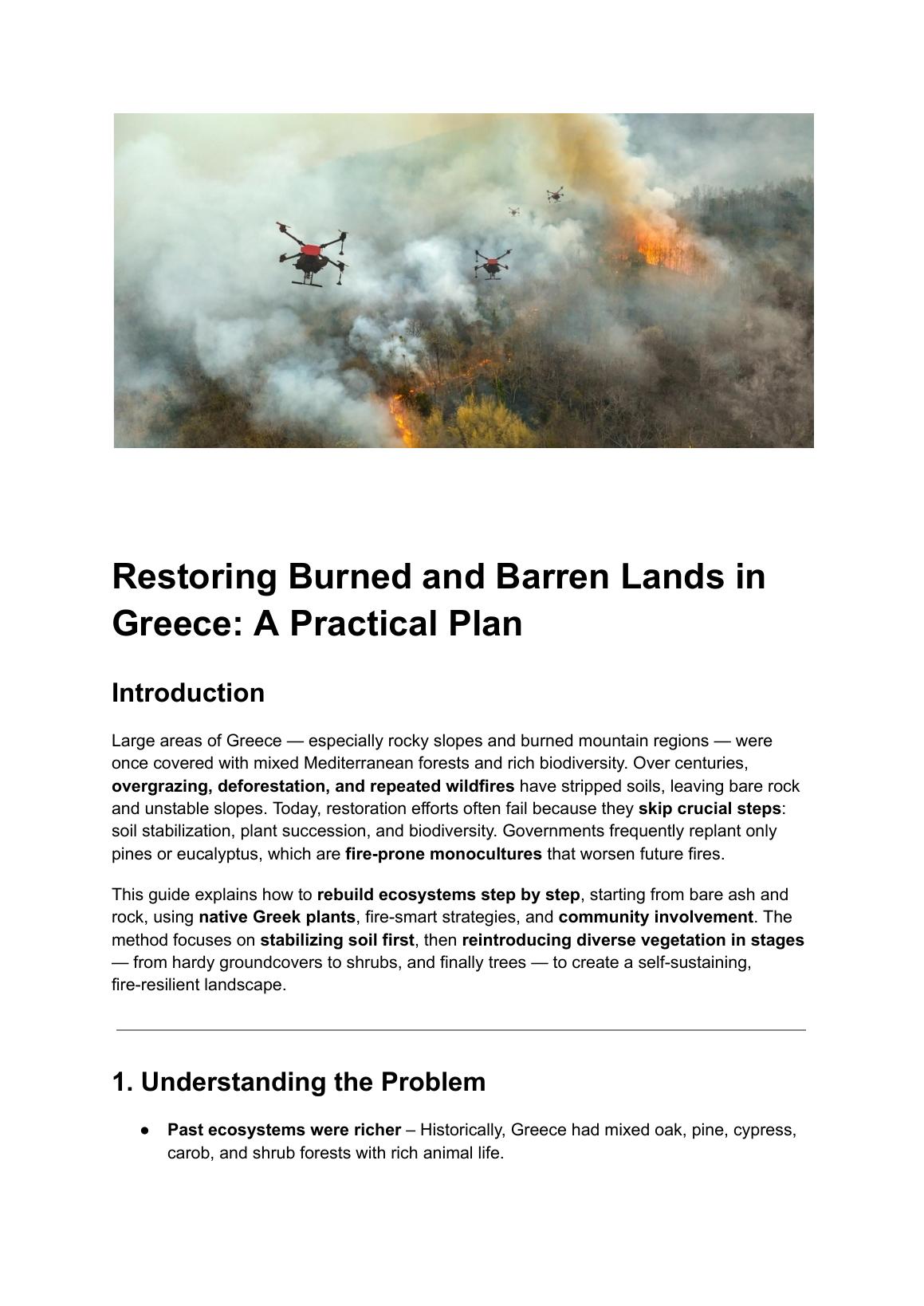
The proposed network combines fixed thermal monitoring stations, autonomous drone hubs and AI-assisted control centres to target fire confirmation within 1–3 minutes. The system would connect detection directly with command and response, giving teams earlier information on the location and development of a potential incident before conventional reports and aerial deployment can catch up.
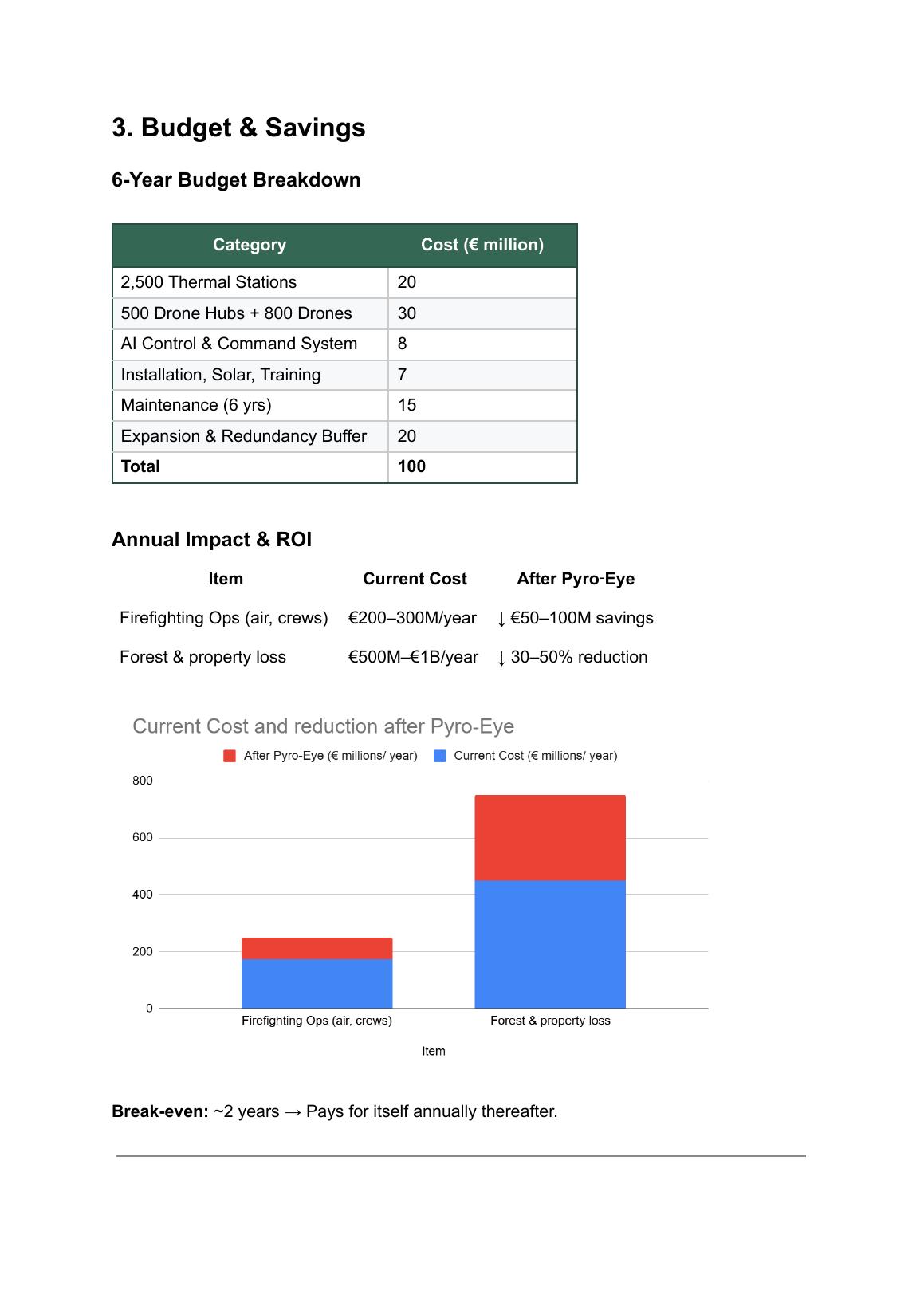
The strategy sets out a six-year, €100 million national programme including 2,500 thermal stations, 500 drone hubs with 800 drones, an AI command system, installation, training, maintenance and redundancy. These figures form part of the proposal’s budget model and are presented as the scale required for nationwide coverage.
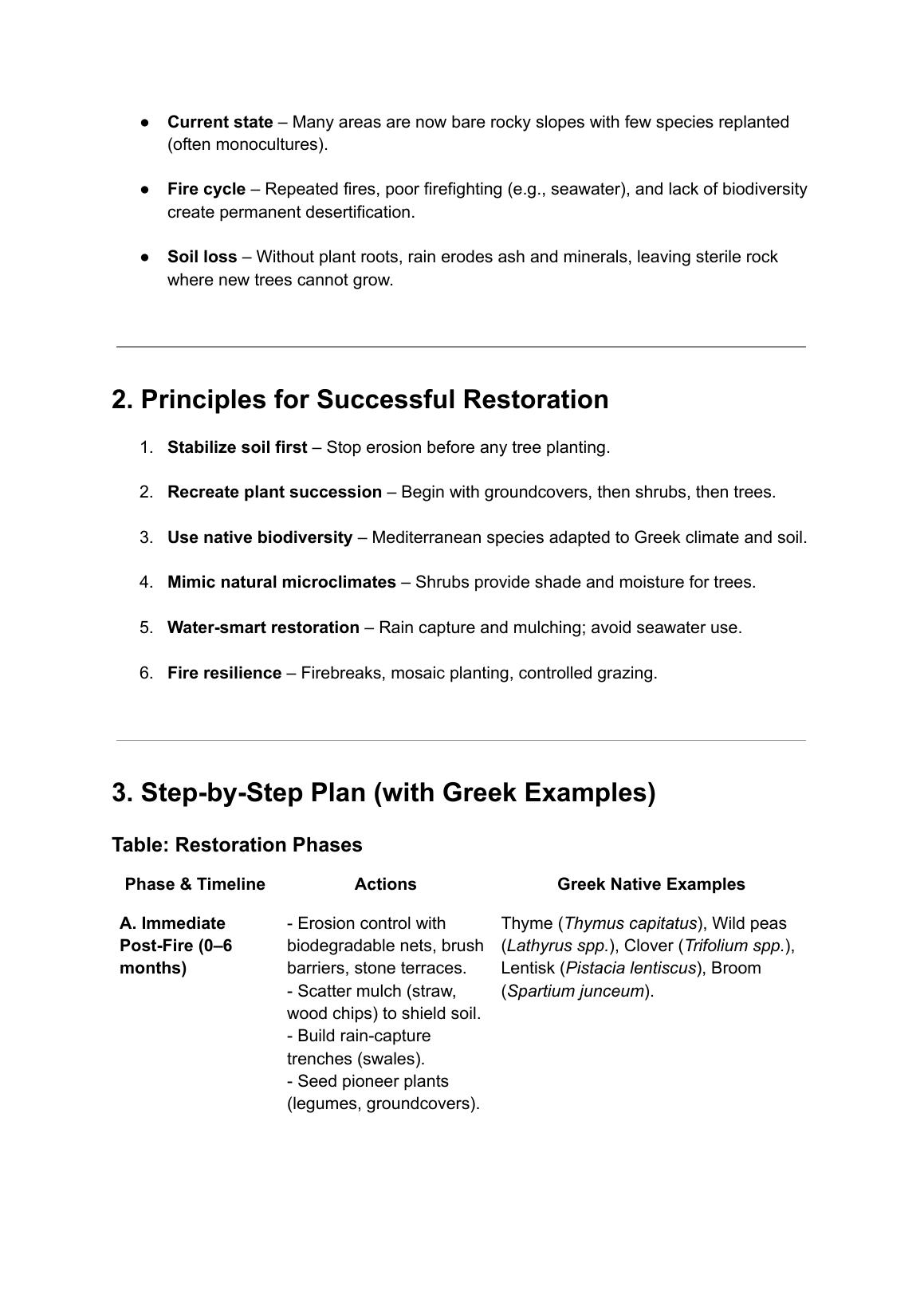
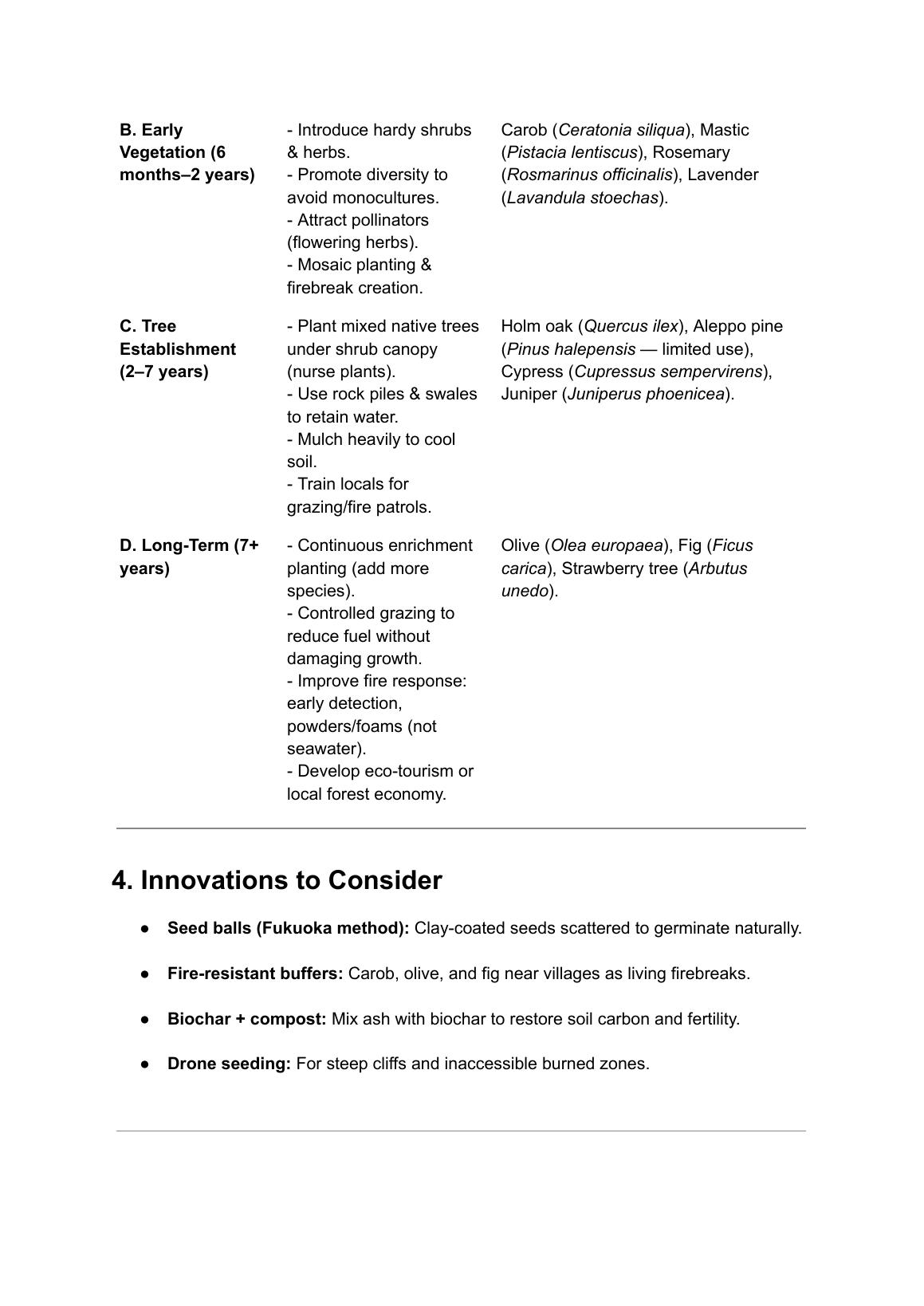
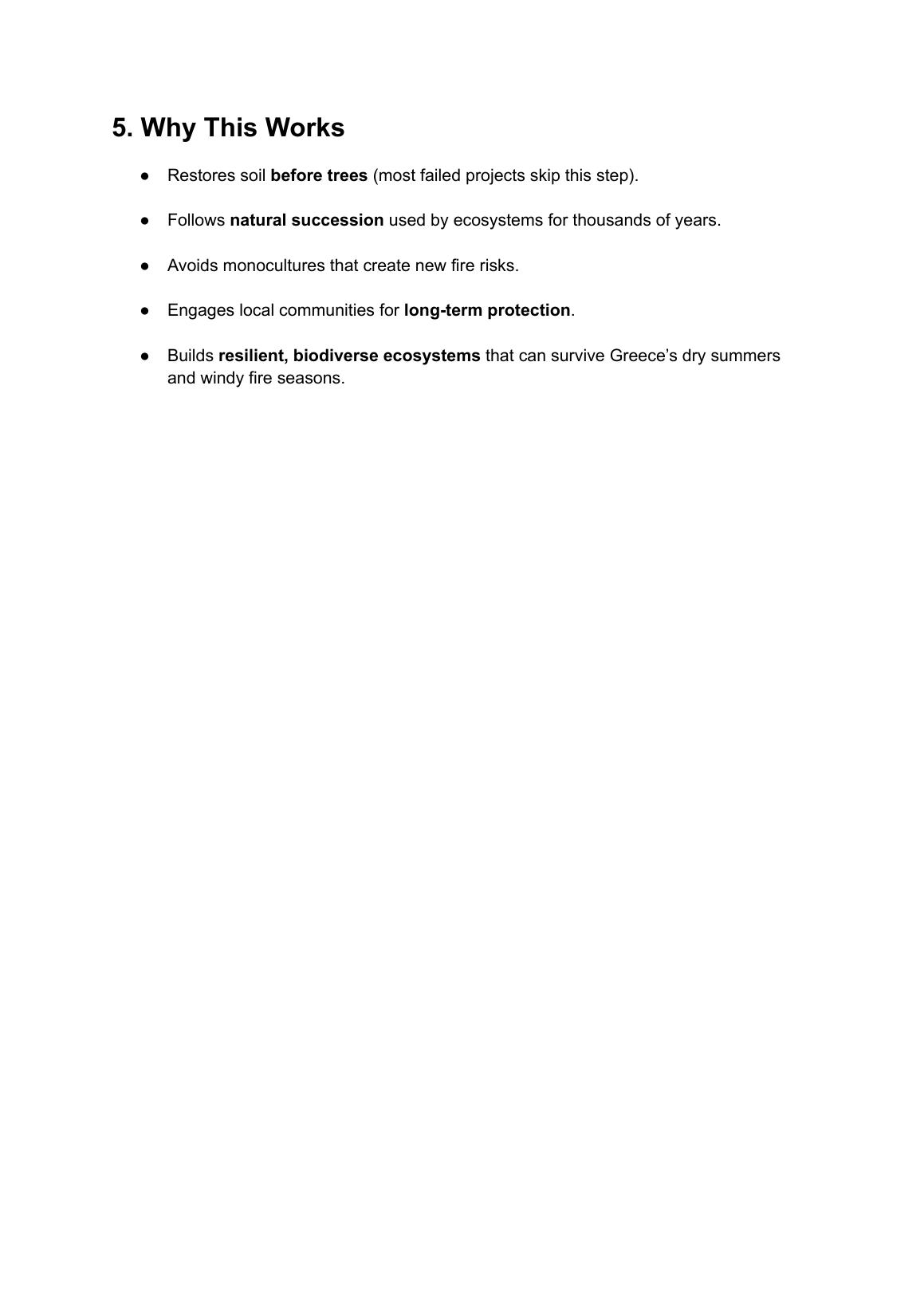
The wider concept also links wildfire prevention with long-term recovery: local manufacturing and technical jobs, restoration of burned landscapes, native biodiversity, erosion control and reforestation. Rather than treating detection and recovery as separate problems, PYRO‑EYE 2500 frames them as one national resilience system — preventing fires from escalating while rebuilding the landscapes most at risk.